Pills, IUDs, Implants, Oh My: Every Birth Control Option in the US, Ranked by Real Life Fit
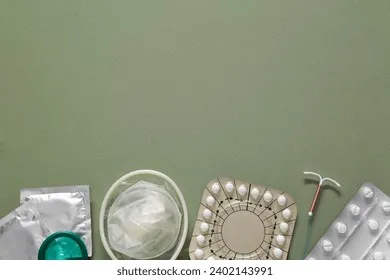
Photo: contraceptive options flat lay birth control pills IUD on desk, via www.shutterstock.com
Somewhere between your teenage years and perimenopause, most of us will cycle through multiple birth control methods — usually because the first one didn't work out the way the pamphlet promised. Yet nobody hands you a cheat sheet comparing them all side by side.
Consider this that cheat sheet. No hype, no scare tactics, just what the evidence says about every method available in the US right now.
First, the Numbers That Actually Matter
Contraceptive effectiveness gets reported two ways, and the gap between them is where most surprises live. "Perfect use" assumes you do everything exactly right. "Typical use" reflects real humans who forget pills, miss windows, and misread instructions.
- Implant (Nexplanon): over 99% typical use
- IUDs (hormonal and copper): over 99% typical use
- Sterilization: over 99%
- Shot (Depo-Provera): 96% typical use
- Pills, ring, patch: 93% typical use
- Condoms: 87% typical use
Notice something? The methods you don't have to think about daily are the ones that win. That's not an accident — it's the single most useful insight in all of contraception.
The Set-It-and-Forget-It Tier
The Implant
A matchstick-sized rod in your upper arm, good for three years (often effective up to five). It's the most effective reversible method on the market, full stop. The tradeoff: irregular bleeding is common, especially in year one, and some people spot for months. Others don't bleed at all, which they consider a feature.
Hormonal IUDs (Mirena, Kyleena, Liletta, Skyla)
Different doses of the same hormone, levonorgestrel. Mirena and Liletta last up to eight years; smaller ones run three to five. Periods typically get lighter — many users eventually stop bleeding entirely — which is why hormonal IUDs are also prescribed for heavy periods. Insertion day can be rough (ask for ibuprofen beforehand; it's legitimate to request it), but after that, there's nothing to remember for years.
Copper IUD (Paragard)
No hormones, lasts up to ten years, and works as emergency contraception if inserted within five days of unprotected sex. The catch: periods often get heavier and crampier, so it's best suited to people who already tolerate their periods well.
Sterilization
Tubal removal (not just tying) is increasingly common, and yes, you can get one at 25 without three kids and a husband's signature — the outdated "two-kid rule" is not actual law. Vasectomy is cheaper, faster, and safer if you have a male partner, though it's not instantly reversible.
The Daily-and-Weekly Tier
Combination Pills
Estrogen plus progestin. Highly effective when taken perfectly; less so in real life. Estrogen carries small risks of blood clots — higher if you smoke, migraine with aura, or are over 35. Bonus effects: predictable periods, often clearer skin.
The Progestin-Only Pill — Now Over the Counter
This is the big 2025 change: Opill, a progestin-only pill, is available on pharmacy shelves without a prescription. No appointment, no insurance fight, no waiting room. It's a genuinely big deal for the millions of Americans living in contraceptive deserts. The fine print: take it at the same time every day — a three-hour delay counts as late, which makes it less forgiving than combination pills.
The Ring and the Patch
Same hormones as the pill, different delivery. The ring (Annovera is reusable for a year; generic rings are monthly) sits in the vagina for three weeks at a time. The patch goes on your skin weekly. Both mean fewer daily decisions, and both carry the same clot considerations as estrogen pills.
The Shot, and What to Know in 2025
Depo-Provera is an injection every three months, and it's a workhorse for people who can't take estrogen. Two things to know: it can temporarily delay the return of fertility (sometimes six months to a year after stopping), and long-term use is linked to reduced bone density. There's also an at-home version — depo medroxyprogesterone acetate under the skin — you can self-inject after training. Recently, Depo users have been advised to discuss the bone-density data with their providers, especially with extended use.
Non-Hormonal Backup Options
Condoms remain the only method that also prevents STIs — a reason to keep them in the drawer even alongside something else. Diaphragms and the Phexxi gel exist, with more modest effectiveness (Phexxi sits around 79% typical use). Fertility awareness apps have FDA-cleared versions, but they demand meticulous daily tracking and an extremely regular cycle.
How to Switch Without Losing Coverage
Switching methods is normal — the average person uses several over their lifetime. The key is overlap:
- Starting a hormonal method: if you start within five days of your period starting (or right after an abortion/miscarriage), you're protected immediately. Otherwise, use backup for seven days.
- Stopping the shot: know that fertility may take months to return. If you want to be pregnant soon, plan ahead.
- IUD to IUD: replacement can happen the same day. No gap, no backup needed.
- Coming off everything: you can get pregnant almost immediately after stopping pills, ring, patch, or IUDs. Don't let anyone tell you otherwise.
When Your Provider Pushes One Option
Some nudging is legitimate — providers rightly emphasize IUDs and implants because they're dramatically more effective. But if a method doesn't fit your body, your budget, or your plans, it's the wrong method for you, full stop.
Three questions worth asking:
- "What are the typical-use failure rates, not perfect-use?"
- "What does this cost with my insurance, including the insertion visit?"
- "What happens when I stop — how quickly does fertility come back?"
Under the ACA, most private insurance plans cover prescription contraception at $0 copay — though the OTC Opill coverage depends on whether you have a prescription. If cost is the barrier, say so. Title X clinics, Planned Parenthood, and many health departments offer sliding-scale options.
The Bottom Line
The best birth control is the one you'll actually use consistently, can afford, and feel good about. That answer changes at 19, at 29, at 39, and at 45 — and it's allowed to change. Bring this list to your next appointment and treat it like a menu, not a prescription.