Pool Chemistry 101: What Your Vaginal pH Is Actually Doing (And What Marketing Gets Wrong)
Photo: J3D3, CC BY-SA 3.0, via Wikimedia Commons
Anyone who's owned a pool knows the drill: test strips, pH readings, chemicals added in careful amounts to keep the water slightly in the right zone. Too far off, and things get cloudy, itchy, and overrun with the wrong kind of life.
Your vagina operates on the exact same principle. It just doesn't come with a test kit — and the aisle at CVS is full of products that would love to sell you one anyway.
The Actual Numbers, No Marketing Spin
A healthy vaginal pH sits between 3.8 and 4.5. That's acidic — more acidic than your skin (around 5.5), way more acidic than plain water (a neutral 7), and roughly in the neighborhood of a glass of white wine.
That acidity isn't a flaw. It's the whole system. The vagina's low pH exists to keep hostile bacteria and yeast from setting up shop. The main engine behind it is a family of bacteria called Lactobacillus, which churn out lactic acid as a byproduct of their metabolism. More Lacto, more acid, healthier environment.
When pH drifts upward — above roughly 4.7 — conditions flip. Harmful bacteria gain ground, and that's when you get bacterial vaginosis (BV), the most common vaginal infection in reproductive-age women in the US. BV isn't technically an infection in the classic sense; it's a chemistry failure. The ecosystem tipped, and the wrong bacteria won.
What Actually Moves the Needle
Here's where the chemistry gets practical, because a handful of very normal things can raise vaginal pH:
Semen. Ejaculate is alkaline, with a pH around 7.2 to 8. A single encounter can temporarily shift things for a day or two. Your vagina usually recovers on its own.
Douching. This is the big one. Rinsing the vagina with anything — water, vinegar, commercial solutions — flushes out Lactobacillus and pushes pH up. The American College of Obstetricians and Gynecologists, along with basically every OB in the country, recommends against it. The vagina cleans itself. It does not need your help.
Blood. Menstrual blood is also alkaline, which is why some people notice more odor or irritation during their period. Tampons and menstrual cups left in too long can amplify the shift.
Antibiotics. Broad-spectrum antibiotics kill good bacteria along with bad, sometimes clearing out Lactobacillus and inviting yeast to overgrow.
Perimenopause. Falling estrogen means less glycogen (the sugar Lactobacillus feeds on), which means fewer good bacteria and a gradually rising pH. This is a normal part of aging, not a hygiene failure.
Notice what's not on that list: wearing leggings, skipping a day of soap, or using a pH-balanced wash on the external vulva. Your vulva — the skin part — is fine with gentle, fragrance-free cleansing. It's the internal canal that's self-regulating.
Decoding the Packaging
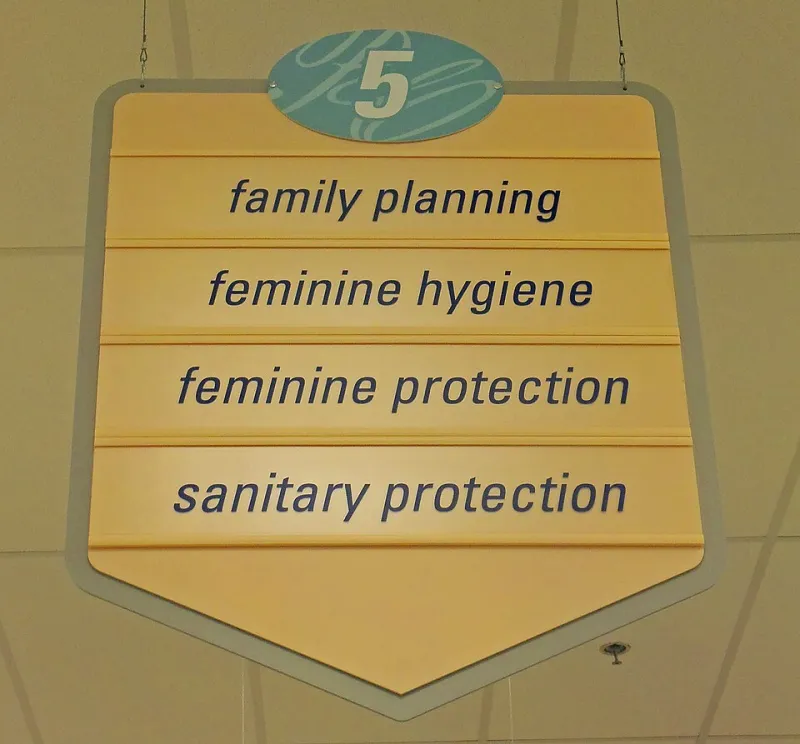
Now let's translate the shelf, because the language on these bottles is doing a lot of work:
- "pH-balanced" — Balanced to what? A wash at pH 5.5 is technically balanced for your skin, not your vagina. Some washes do sit near 4.5, but if you're only using them externally, the number matters far less than the marketing suggests.
- "Feminine fresh" — Not a chemical claim. A scent claim. And a healthy vagina has a mild, inoffensive odor that no wash should be tasked with erasing.
- "Odor control" — Odor that's strong, fishy, or new is a symptom, not a problem you mask. Masking BV with scented products can delay diagnosis.
- "Probiotic-infused" — Vaginal probiotics applied externally are doing approximately nothing. The bacteria live inside, in specific strains, at specific depths.
- "Gynecologist tested" — Tested how? Tested by whom? This phrase has no legal definition in the US.
Your Drugstore Cheat Sheet
Photograph this or screenshot it for the aisle:
- Buy unscented, fragrance-free, gentle wash — for external use only. Any brand. The cheapest one is fine.
- Skip anything labeled douche. All of them. Always.
- Skip scented tampons and pads. Fragrance in menstrual products is a common irritant.
- If you want a wash with a pH around 4.5, sure — but know it's for your vulva, and the "balancing" claim is mostly packaging.
- Cotton underwear, breathable fabrics — not a pH claim, just solid advice for preventing moisture-trapped irritation.
- If something smells off, itches, or changes discharge color, buy nothing — call your provider. Treatment for BV and yeast is prescription or targeted OTC medication, not hygiene products.
The Bottom Line
Your vagina is a chemistry experiment that's been running successfully since puberty, staffed by bacteria that evolved for exactly this job. The best intervention is usually the least intervention: water on the outside, nothing on the inside, and a healthcare provider when the chemistry actually breaks.
The pool guy doesn't dump a gallon of clarifier in when the water looks fine. Extend the same courtesy to yourself.