Nine Years, Four Doctors, One Diagnosis: My Endometriosis Story and the Questions That Finally Got Me Heard
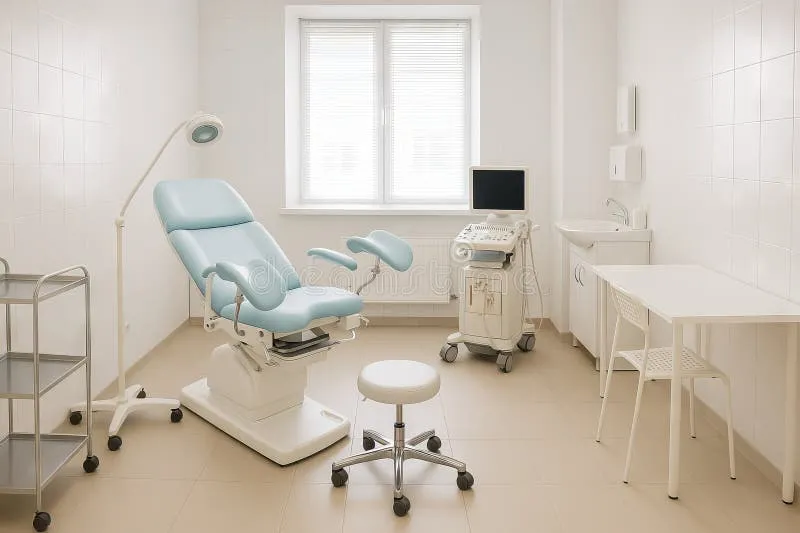
Photo: Shixart1985, CC BY 2.0, via Wikimedia Commons
The first time I remember doubling over was in a high school biology class, age fourteen. I asked to go to the nurse. The nurse gave me a heating pad and a note that said "menstrual cramps, ongoing issue." Nobody asked a follow-up question. Why would they? Periods hurt. Everyone knows that.
What nobody told me was that there's a difference between hurts and hurts so badly you can't stand up, and that the second one is not a rite of passage. It took nine years and four doctors before a laparoscopy confirmed stage III endometriosis — tissue similar to the uterine lining growing where it shouldn't, on my ovaries and bowel, causing inflammation, adhesions, and a decade of being told to try ibuprofen.
Year One Through Six: The 'Normal' Years
My pain followed a pattern I didn't understand yet: severe the first two days of my period, but also flaring randomly — during ovulation, after sex, sometimes with bowel movements. I described it as "bad cramps" because I didn't have better language. My doctors heard "bad cramps" and prescribed hormonal birth control, which did help, which I now realize delayed everything. Suppressing symptoms isn't the same as diagnosing them.
Here's the clinical reality I learned the hard way: endometriosis affects an estimated 1 in 10 women of reproductive age, and the average diagnostic delay in the US hovers around seven to ten years. Part of that is that the only definitive diagnosis is still surgical — you can't confirm it with a blood test or a standard ultrasound, especially in earlier stages. Part of it is that pelvic pain in young women gets disproportionately dismissed as normal menstruation, anxiety, or "low pain tolerance."
What I Wish I'd Said in Year One
By my third doctor, I'd learned to change my vocabulary, and honestly, it changed how I was treated. Instead of "bad periods," I started saying:
- "My pain causes me to miss school and work."
- "Ibuprofen at maximum dose does not control it."
- "I have pain with bowel movements and during sex, not just during my period."
- "My mother had a hysterectomy at 38 for unexplained pain." (Family history is a real risk factor — I didn't know that yet.)
Function, not adjectives. Doctors hear "bad" constantly. They respond to data: days missed, medications failed, symptoms outside of menstruation. It shouldn't work this way, but it does.
If your pain is interfering with your life, ask directly: "Could this be endometriosis, and what would rule it out?" You're not being difficult. You're being specific.
Year Seven: The Ultrasound That Missed It, and the Surgery That Didn't
A transvaginal ultrasound showed "nothing concerning." That's common — endometriosis often doesn't appear on imaging unless it forms endometriomas (chocolate cysts) or deep nodules. My OB-GYN at the time offered to "keep an eye on it." I found a new one.
The gynecologist I finally saw specialized in minimally invasive surgery. She explained that laparoscopy — a small camera through a tiny incision — was the gold standard for diagnosis, and that she could remove lesions in the same procedure if she found them. I woke up with a diagnosis, three small bandages, and, for the first time in nine years, a name for what was happening to me.
The Treatment Trade-Offs Nobody Explains
There's no cure for endometriosis, only management, and every option has a cost:
- Excision surgery removes lesions at their root and works well for many, but lesions can recur — I was told roughly 15–20% need repeat surgery within a few years.
- Hormonal suppression (birth control, progestins, GnRH agonists like Lupron or newer options like Orilissa) reduces symptoms by starving lesions of estrogen — but you can't get pregnant on them, and side effects range from bone density loss to mood changes.
- Hysterectomy is sometimes mentioned, but it's not a cure unless all endometrial tissue outside the uterus is also removed — a fact that surprises a lot of patients.
I chose excision surgery plus continuous birth control. Two years later, I'm mostly pain-free, but I've had to accept that this is management, not erasure. Fertility is also part of the conversation — endometriosis can impair it, and I wish someone had told me at 20 that this was a thing to think about, not at 28 when I was already in a surgeon's office.
If You're in Year One Right Now
Track your pain — location, timing, what it interferes with. Bring it in writing. Ask for a referral to a gynecologist who specializes in endometriosis, not just any gynecologist; the difference in what they see on a scan, and in how they hear you, is genuinely enormous. And if one doctor dismisses you, that's information about that doctor, not about the validity of your pain.
Nine years is too long to learn your own body's name. But it's never too early to start asking better questions.