Meet Lactobacillus: The Bacteria Running Your Vagina (And Why Your Gut Routine Isn't Helping Her)
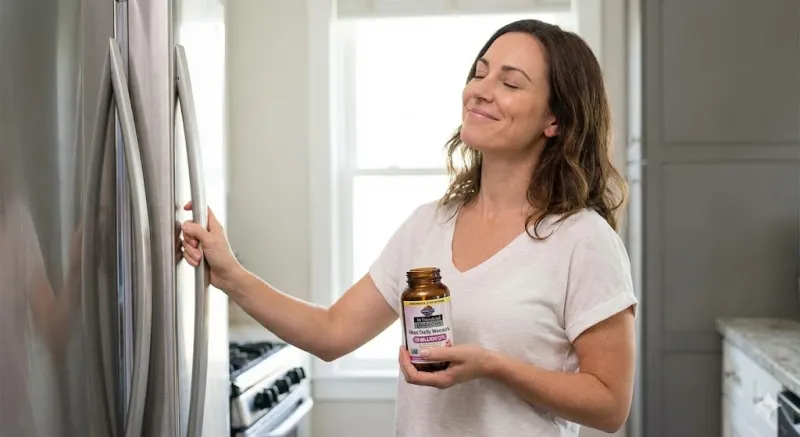
Photo: woman holding probiotic supplement bottle kitchen natural light, via vitaminproguide.com
You take your daily probiotic. You eat Greek yogurt. You've got a kombucha habit you've half-jokingly called 'self-care.' And yet — you're on your third yeast infection this year, or BV keeps coming back like a bad ex.
Here's the thing nobody tells you at the wellness store: your gut and your vagina are two totally different neighborhoods. The bacteria that thrive in one don't automatically move into the other. Understanding that difference is the key to figuring out why your routine isn't working.
The Vaginal Microbiome Is a Different Beast
Your gut hosts hundreds of bacterial species living in bustling, chaotic diversity. Your vagina? It's more like a gated community. In a healthy reproductive-age vagina, one group dominates: Lactobacillus, particularly strains like L. crispatus and L. iners.
These bacteria churn out lactic acid, keeping vaginal pH acidic — roughly between 3.8 and 4.5. That acidity isn't just a quirk. It's a security system. Low pH crowds out problematic bacteria and keeps yeast from overrunning the place.
When Lactobacillus gets outnumbered, things go sideways. That's when bacterial vaginosis (BV) and yeast infections move in.
What Throws the Balance Off
Plenty of everyday habits can disrupt the neighborhood:
- Antibiotics. They wipe out bacteria indiscriminately — the troublemakers and the Lactobacillus keeping order. This is why yeast infections often show up right after a course of antibiotics for a sinus infection or UTI.
- Douching and scented products. Your vagina cleans itself. Douches, scented washes, and those flushable wipes are evicting your good bacteria for no reason.
- Semen. Semen is alkaline, so it temporarily raises vaginal pH. Totally normal, but worth knowing if you notice changes after sex.
- Hormonal shifts. Estrogen feeds Lactobacillus. When estrogen drops — during perimenopause, postpartum, or on certain birth control — the microbiome can shift too.
- Your gym wear. Sitting in damp leggings after spin class creates a warm, moist environment yeast loves. Change out of sweaty clothes promptly, and consider cotton underwear for everyday wear.
- Diet. The research is still developing, but high-sugar diets may feed yeast overgrowth in some people, and overall dietary patterns seem to influence vaginal pH.
BV vs. Yeast Infection: Imbalance or Something More?
Most of the time, these infections are exactly what they look like: an imbalance that needs correcting.
Bacterial vaginosis typically means a thin, grayish discharge with a fishy odor, especially after sex. It's not an STI, but having BV can make you more susceptible to them, so it's worth treating.
Yeast infections bring thick, cottage-cheese-like discharge, itching, and swelling. Uncomfortable, but usually straightforward to treat with OTC antifungals or a prescription.
But see a gynecologist if:
- Symptoms keep coming back (four or more yeast infections in a year warrants a workup)
- OTC treatments aren't touching it
- You have pelvic pain, fever, or abnormal bleeding alongside discharge
- Your partner has symptoms too
Recurrent symptoms can sometimes signal something else — resistant strains, undiagnosed diabetes, an STI, or hormonal changes that need a different treatment approach. Don't just keep buying the same cream and hoping.
Are Vaginal Probiotics Worth $40 a Bottle?
Short answer: it's complicated.
Oral probiotics containing L. rhamnosus GR-1 and L. reuteri RC-14 have the best evidence behind them — some studies show they can reduce recurrent BV and yeast infections. But the research is mixed, dosages vary wildly between brands, and the supplement industry isn't regulated like prescription medication. What's on the label isn't always what's in the capsule.
Vaginal suppository probiotics are even less studied, though some women with recurrent issues find them helpful alongside prescribed treatment.
Our take: if you're prone to recurrent infections, a reputable oral probiotic with those two strains is a reasonable, low-risk experiment — after you've talked to your gynecologist. But a $40 supplement is not a substitute for actual medical care, and no probiotic will fix an infection you already have.
What Actually Helps
The unglamorous truth: the best vaginal microbiome routine is mostly about what you don't do.
- Skip the scented everything
- Wear breathable underwear
- Get out of wet workout clothes fast
- Take probiotics during and after antibiotic courses
- Manage blood sugar if you're diabetic or prediabetic
- Use condoms if BV keeps recurring — it can reduce relapses
Your vagina has been running a sophisticated ecosystem since puberty. Give it room to do its job — and check in with your gynecologist when something feels off, rather than guessing at the supplement aisle.